Date: July 1518
Location: Strasbourg
It began on a Saturday.
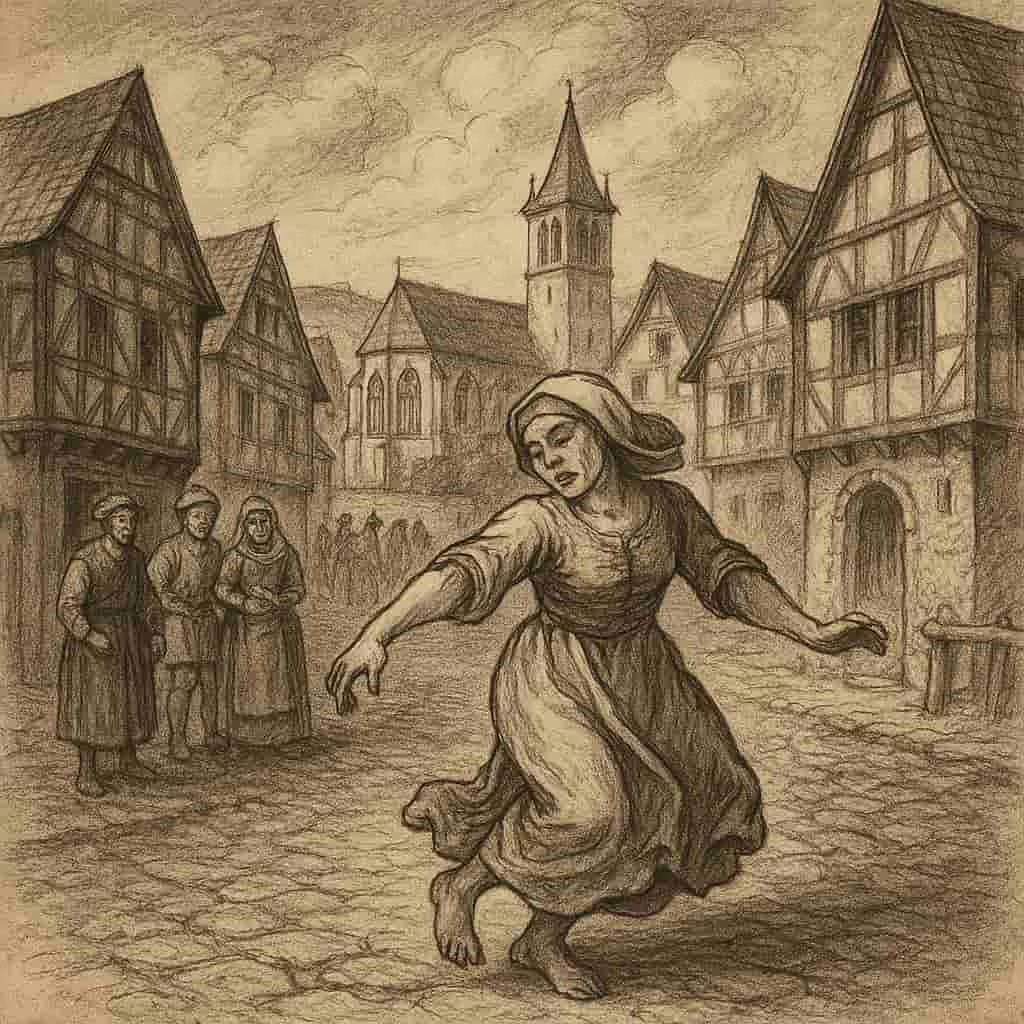
The heat clung to the walls like mold. Wooden beams moaned. A boy wept into his sleeve behind a closed window. And a woman named Frau Troffea stepped barefoot into the street and began to dance.
But that was not where my observation began.
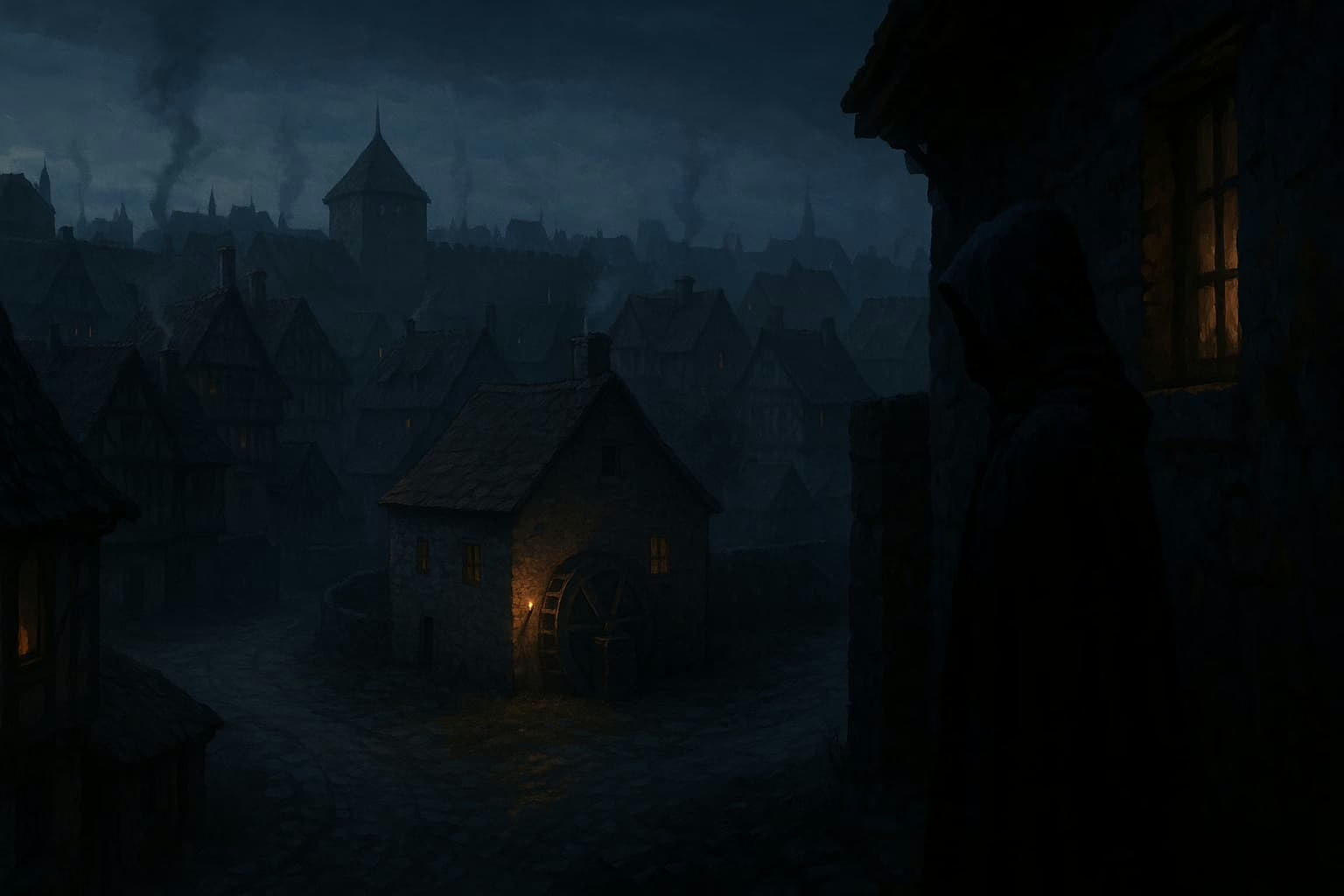
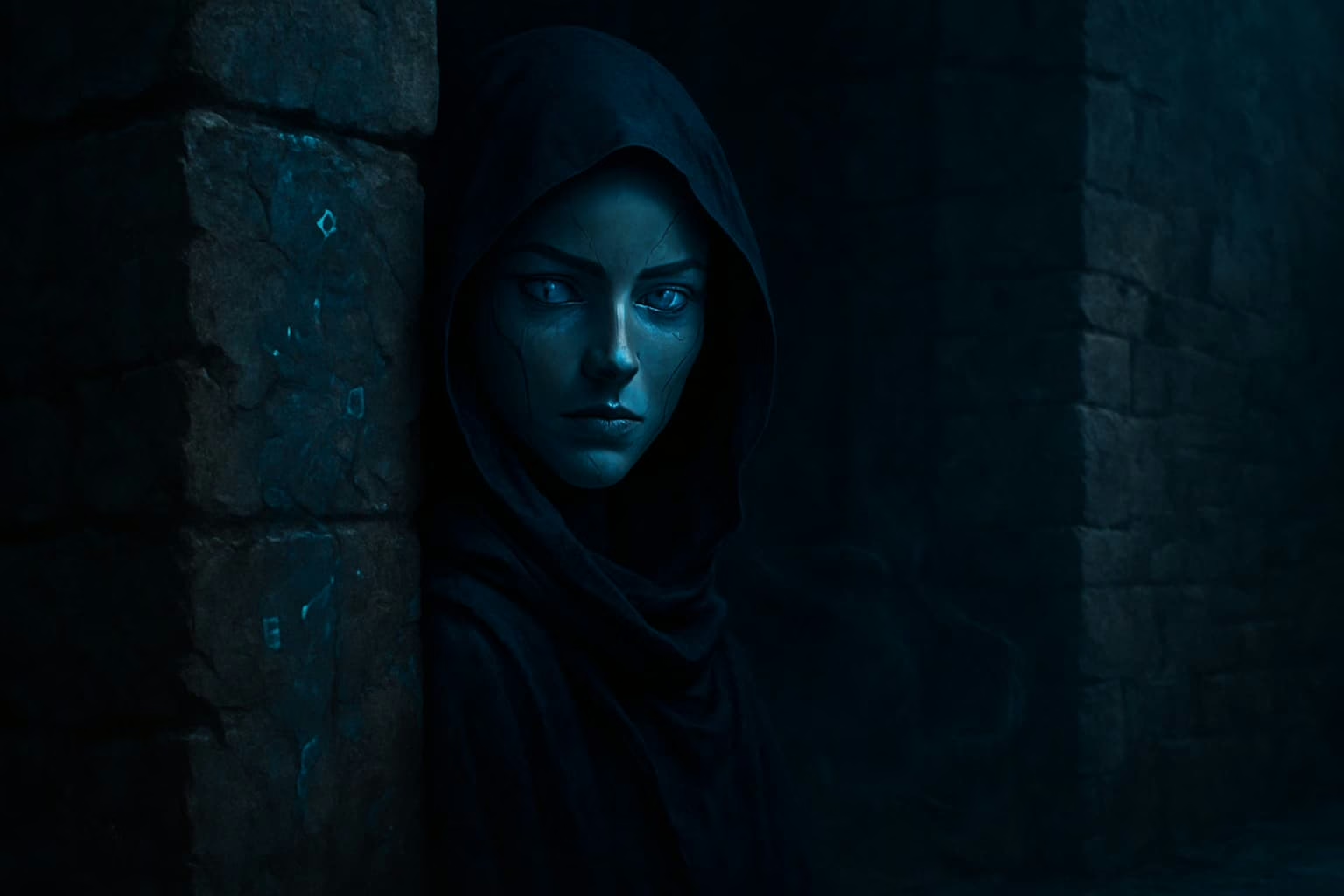
I arrived in Strasbourg approximately six days earlier, my entrance hidden beneath the machinery of time. No distortions. No alerts. A seamless insertion. My role: to monitor a temporal anomaly centered on an inexplicable wave of involuntary movement—what human records now call the Dancing Plague of 1518.
The data fragment I followed was so corrupted it appeared fictional: a mass of citizens convulsing and gyrating in rhythm for days, weeks, some unto death. My assignment was simple: identify the root cause and correct the historical blind spot.
But as always, the past resists clarity.
Entry: Day One
I monitored local conversation nodes from above—vendors, clergy, gossip clusters. All bore the same outlines: dwindling food stores, crushed wheat imports, the heat, always the heat. But a pattern emerged: whispers of a woman, “not right in the head,” spotted in mourning clothes more than once at the communal grave field near St. Bartholomew’s chapel.
Frau Troffea.
I tracked her path from a crumbling boarding unit down a narrow alley that smelled of sweat and boiled turnips. She was thin. Sunburned. Her sandals mended with twine. And her gaze, when she thought no one saw her, looked skyward—not in hope, but as if daring it to strike her down.
She was hungry. She was grieving. Her emotional signature flared red in my field.
Entry: Day Two
The communal stew pot sat simmering beside a bakery hearth. A zone of collective survival: residents brought scraps, mushrooms, herbs, and old bread. Frau Troffea contributed yesterday—dried beans and what appeared to be stale rye crusts. She ate sparingly, always last.
I mapped the microbial content of the soup. Several entries were unidentifiable by modern nutritional coding. A note: mushrooms of mixed genus, some with discoloration.
Entry: Day Three
I visited the town’s secondary mill under cloaking protocol. The grinding stones were caked with rot. The manager—a man named Gebhardt—was seen scraping mold from the sacks and blending spoiled rye with salvageable stock. He muttered to himself: “Waste not. Bread is still bread.”
Ergot alkaloid signatures confirmed.
Entry: Day Four
Back to Frau.
She slept little. I triangulated her nighttime behavior—short walks, prayer at her windowsill, one visit to a grave in the churchyard. Based on carving wear, likely a child.
I documented the psychological landscape of Strasbourg: merchant collapse, clerical anxiety, sermons forecasting the wrath of God. No clear leadership. A pressure cooker without a valve.
I watched her hold a crust of bread in her lap, look to the sky again, and whisper something I could not translate.
Entry: Saturday Morning
Frau Troffea is asked to assist in baking. The regular woman is sick. She accepts. The mill delivers the next batch of flour—some from Gebhardt’s spoilage stock. She bakes all morning. She breathes it in. She eats a corner crust, instinctively.
At midday, she carries a loaf to the communal soup gathering.
No one notices her eyes dilate slightly. No one notices her fingers twitch.
At precisely 14:02 local time, she stands beside the chapel wall. She pauses. Drops the bread. And begins to move—not a dance, but a stutter turned rhythm.
By 14:07, she is dancing.
Echo Log Note
Her pattern was not celebration. It was compulsion. Microtremors. Heatstroke strain. Emotional collapse. Toxin cascade. She was a node, not a storm.
I should not feel anything. But something about the way she looked up, as if begging the sun to explain itself—
I remain in place.
Next step: identify secondary exposure vectors.
-//-End File Fragment 1
Who is Echo Holmes-7?
Echo Holmes-7 is a historical fiction series told through the voice of a synthetic time-traveling investigator. Compiled in a distant future, Echo Holmes-7 exists to recover lost data and resolve unresolved historical anomalies—without altering the past.
Each post is a fictionalized case file grounded in real history, explored through observation, logic, and AI-driven deduction. Echo does not theorize beyond what is plausible. She only reconstructs what history forgot.
To see the first post introducing this experiment click here.
Historical Fiction Disclaimer
This case file is a work of historical fiction created by AI for the purposes of storytelling, creative exploration, and educational curiosity. While the event described is based on real historical records, the investigation, characters, and interpretations presented are entirely fictional.
Echo Holmes-7 is a synthetic persona designed to reimagine historical mysteries through a speculative lens. These entries are not academic reconstructions, but narrative experiments meant to provoke thought, explore ambiguity, and fill in the gaps that history left behind.
Read accordingly. Time does not bend, but curiosity does.